 Skip to content
The Power of Deep Release: The Ultimate Guide to Deep Tissue Massage
What is Deep Tissue Massage?
Deep tissue massage is a therapeutic and intensive form of bodywork that focuses on the deepest layers of muscle tissue and the surrounding connective tissue, known as fascia. While a Swedish massage focuses on the superficial layers of the skin and muscle to induce general relaxation, deep tissue massage is designed to reach the “core” of the body’s tension. It is a targeted approach, specifically aimed at chronic aches, stiff necks, sore shoulders, and lower back tightness.
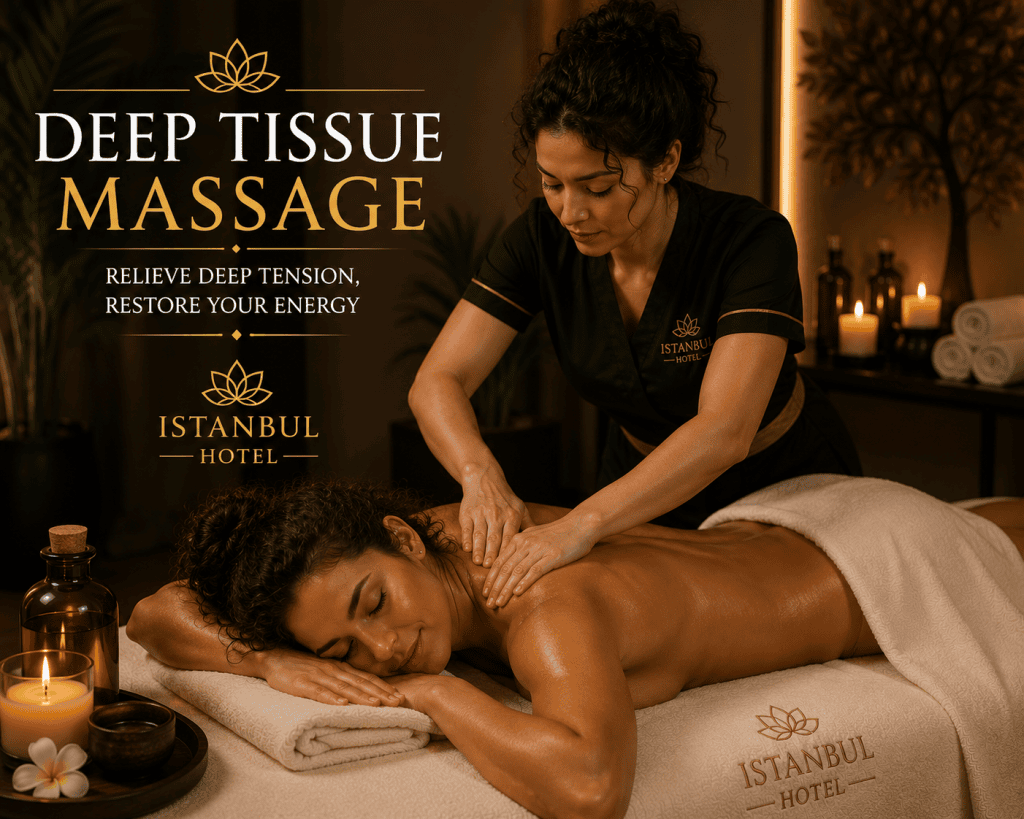
The fundamental philosophy of deep tissue massage is the elimination of adhesions. Adhesions are bands of rigid, painful tissue—commonly referred to as “knots”—that can form as a result of overuse, poor posture, or injury. These adhesions block circulation, restrict the movement of muscles, and can cause referred pain in other parts of the body. By applying slow, deliberate, and intense pressure, the practitioner physically breaks down these adhesions, “melting” the knots and restoring the muscle’s natural elasticity and function.
From a psychological and sensual perspective, deep tissue massage explores the fascinating boundary between pain and pleasure. Many receivers describe the sensation of a deep tissue massage as “good pain.” This occurs because the intense pressure triggers a massive release of endorphins—the body’s natural painkillers—and dopamine. When a chronic knot is finally released, the sensation is often described as a “wave of relief” or an “electric release,” leading to a state of profound physical and mental euphoria.
In a luxury or sensual context, deep tissue massage is about total surrender. Because the pressure is intense, the receiver must trust the practitioner completely, breathing through the intensity to allow the body to open up. This creates a powerful bond of intimacy and trust, transforming a clinical treatment into a deeply personal and liberating experience of physical catharsis.
How to Perform a Deep Tissue Massage
Performing a professional deep tissue massage is not about applying “maximum force,” but about applying precise pressure at the right depth and angle. It is a slow, meditative process that requires a deep understanding of anatomy and an intuitive connection with the receiver’s body.
1. Designing the Sanctuary of Release
Because deep tissue work can be intense, the environment must be optimized to keep the receiver’s nervous system calm.
The Atmosphere: The room should be warm and dimly lit. The use of amber lighting and soft, low-frequency music helps the brain shift from “alert” to “relaxed,” which prevents the muscles from instinctively tensing up against the pressure. The Lubricant: A high-quality, thick oil or cream is essential. Unlike the light oils used in Swedish massage, deep tissue work requires a lubricant that provides enough glide to prevent skin irritation but enough “grip” to allow the therapist to penetrate the deeper muscle layers. The Mindset: The practitioner must establish a “feedback loop” with the receiver. Since the pressure is deep, communication—both verbal and non-verbal (such as breathing patterns)—is critical to ensure the pressure is therapeutic and not overwhelming.
2. The Core Techniques of Deep Pressure
Deep tissue massage utilizes a variety of tools beyond the fingertips, including the palms, elbows, and forearms.
A. Slow, Gliding Strokes (Warming the Tissue)
No deep tissue massage begins with deep pressure. The session starts with slow effleurage—long, sweeping strokes that warm the superficial muscles. This increases blood flow and signals to the brain that it is safe to relax, making the deeper layers more accessible.
B. Cross-Fiber Friction (Breaking the Knots)
Once the area is warm, the practitioner employs cross-fiber friction. Instead of gliding along the muscle, the therapist applies pressure across the muscle fibers in a perpendicular motion. This creates a localized heat and physically separates the adhered layers of fascia, breaking down the “knots.”
C. Trigger Point Therapy (Ischemic Compression)
The practitioner identifies “trigger points”—hyper-irritable spots in the muscle that cause pain in other areas. By applying steady, concentrated pressure to a single point (often using a thumb or elbow) and holding it for 30 to 90 seconds, the therapist forces the muscle to release its grip, resulting in a sudden and powerful sensation of deep relief.
D. Elbow and Forearm Glides
To reach the deepest layers of the glutes, thighs, and lower back, the practitioner uses their forearms and elbows. These broader surfaces allow for a distribution of weight that can penetrate deep into the tissue without causing sharp pain, creating a feeling of “heavy” and satisfying pressure.
3. The Systematic Sequence
Phase 1: The Posterior Chain (The Back and Glutes)
The session usually begins with the back, as it holds the most chronic tension. The practitioner works from the shoulders down to the lower back, using the elbows to carve through the fascia along the spine. The glutes are then targeted, as they are some of the largest and deepest muscles in the body.
Phase 2: The Lower Extremities (The Legs)
The focus shifts to the hamstrings and calves. Deep, slow strokes are used to flush out metabolic waste and release the tension built up from standing or walking. The practitioner focuses on the areas where the muscle meets the tendon, ensuring full mobility.
Phase 3: The Upper Body (Neck and Shoulders)
The most intense work is often saved for the neck and trapezius muscles. Using the thumbs and elbows, the practitioner releases the “weight of the world” from the shoulders, opening up the chest and improving the receiver’s ability to breathe deeply.
Phase 4: The Integration (Cool Down)
The massage concludes with lighter, soothing strokes. This allows the body to integrate the deep work and prevents the receiver from feeling “bruised.” The result is a state of total physical lightness and mental clarity.
Where Can I Get a Professional Deep Tissue Massage in Istanbul?
A true deep tissue massage requires a practitioner with the strength and anatomical knowledge to work the muscles without causing injury. In a city as vibrant as Istanbul, finding a professional who can balance therapeutic intensity with sensual luxury is essential. Whether you are an athlete recovering from a workout or a professional seeking relief from chronic stress, a high-end session ensures a safe and transcendent experience.
To experience the pinnacle of deep tissue release and professional care in Istanbul, the following providers are the most highly recommended:
Istanbul Hotel Massage: For those who prefer the absolute privacy and luxury of their own hotel suite, this is the premier choice. They specialize in bespoke deep tissue treatments, bringing expert therapists to your room to melt away your stress. They combine technical precision with a touch of sensual intimacy, ensuring you leave the session feeling completely reborn. Book your deep release here: deep tissue massage

